The (lack of) prevalence of women on the film set has been a topic of much debate. While the movie business has been making progress in the right direction on this account, true gender equality is still some way off. A study by Creative Artist Agency (CAA) and shift7 claimed to observe interesting parallels between a movie's lead gender and its success at the box office — generating headlines like "Films with female stars earn more at the box office."
At ScriptBook, we were intrigued by the strong claims these articles make, having never made a similar observation ourselves. Since we have access to similar data, we decided to dig deeper and replicate the study.
The Data
We considered a dataset of movies released between 2014 and 2017 — the same time window used by the CAA/shift7 study. We have access to production budget and box office totals for 541 movies, labeled manually with the lead character's gender across three categories: male-led, female-led, and neither (ensemble casts).
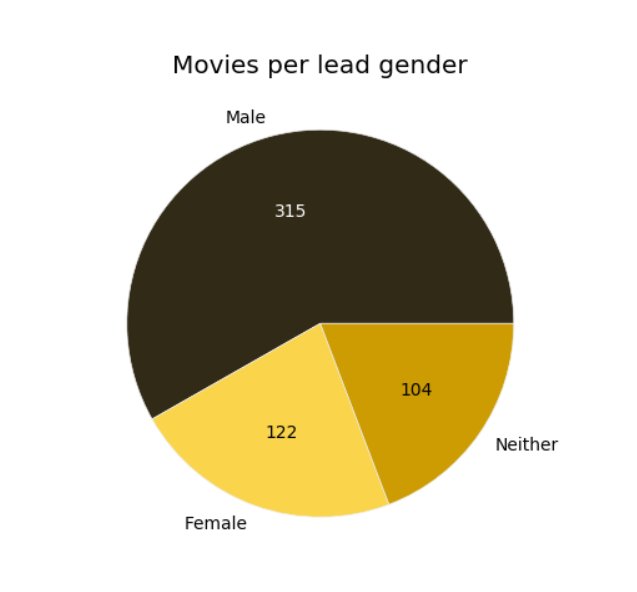
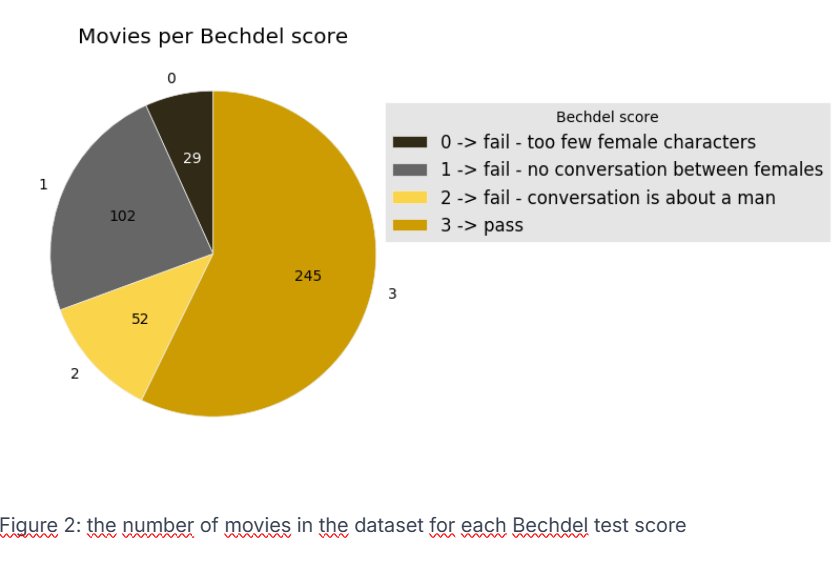
We also labeled our data with Bechdel test scores, sourced from bechdeltest.com. The Bechdel test passes for movies which have at least one scene in which two women have a conversation with each other about something other than a man.
Box Office By Gender
How does lead gender influence a movie's box office performance? We investigated the difference in global box office earnings between male- and female-led movies across different production budget ranges.
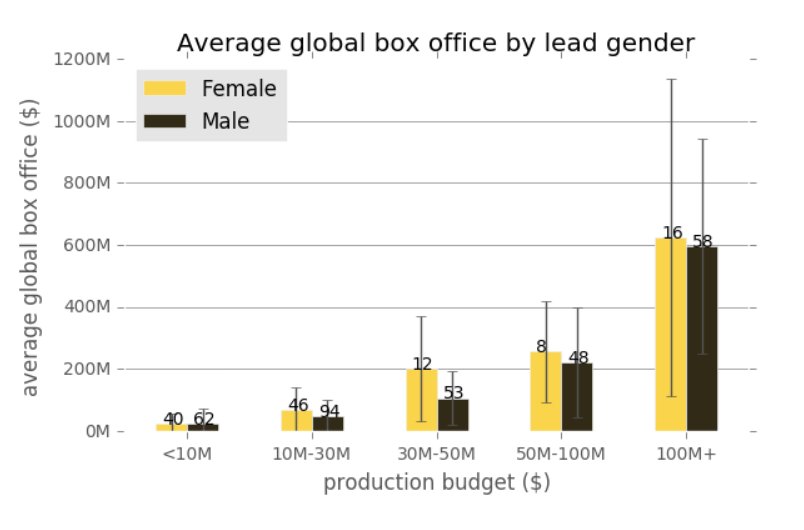
Although the averages for female-led movies are slightly higher than those for male leads, the differences are too small to conclude that this is the result of some systematic gender-related phenomenon — especially given the small number of female-led examples and the large spread of box office revenues.
Only for movies with a production budget in the $30–50M range does the difference seem significant enough to warrant a closer look.
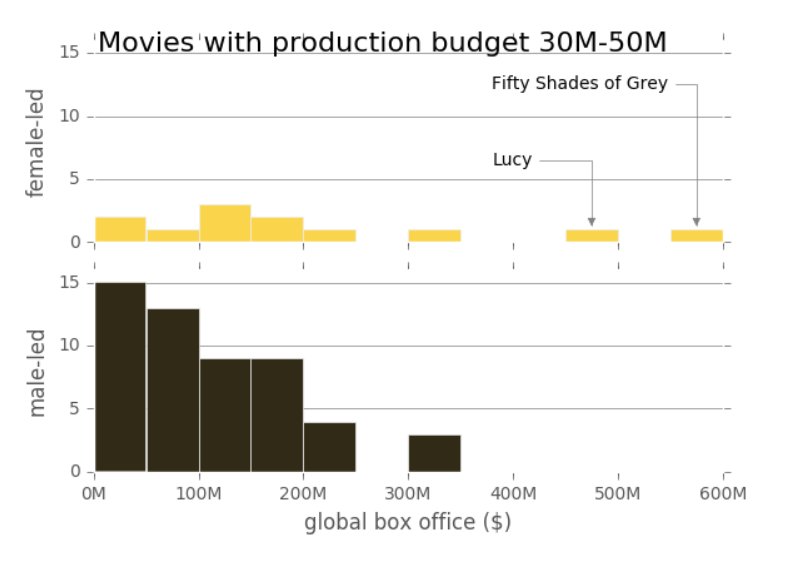
"Our findings show that box office revenues of male-led and female-led movies are quite similar, and that any observed differences are largely caused by the presence of just a few outliers."
The Bechdel Test
If lead gender has no obvious relation to box office, what about the representation of women in general? We compare the box office revenue of movies that pass the Bechdel test to those that don't.
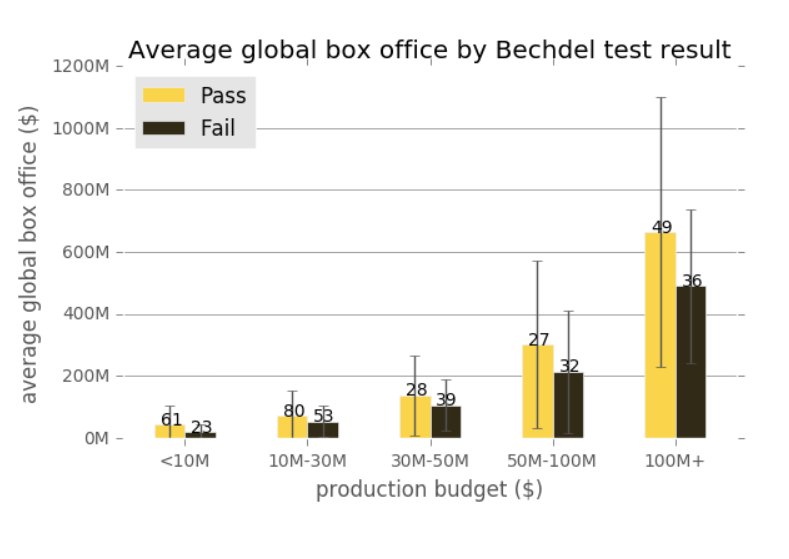
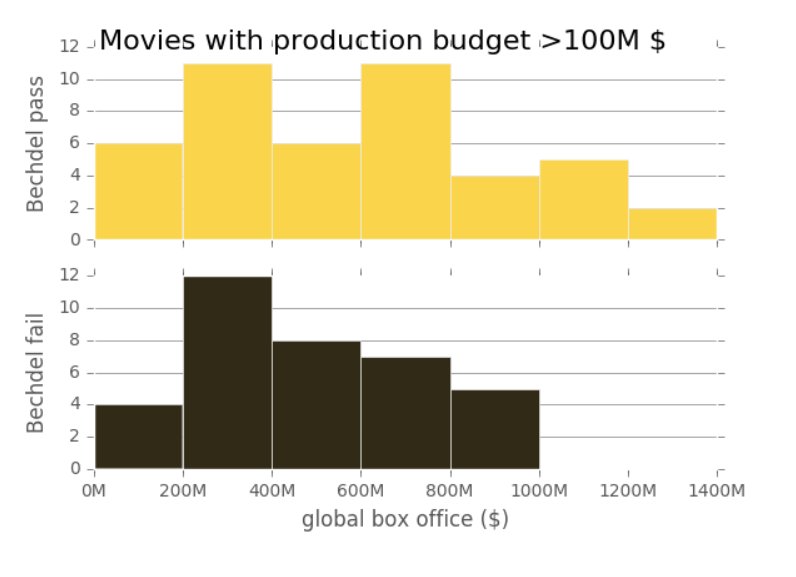
At first glance, the plot suggests that films passing the Bechdel test outperform those that do not — but error margins demand a more nuanced explanation. The top-grossing movies consistently pass the Bechdel test. However, some barely pass — Transformers: Age of Extinction is a clear example — leading us to question whether writers of large blockbusters simply add the required scene to technically pass the test.
Presence of Women in Movies
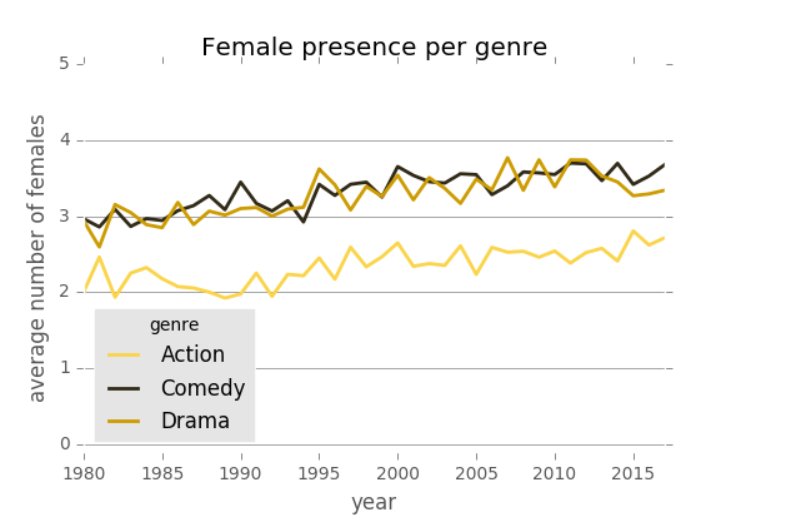
Even today, we still see a large disparity between the number of female and male leads in movies. We examined the number of females among the top ten cast members for each movie and tracked this over time.
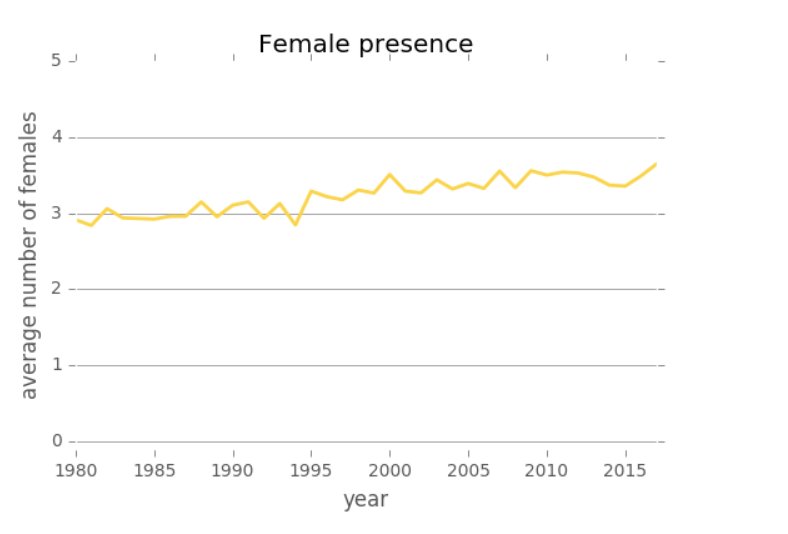
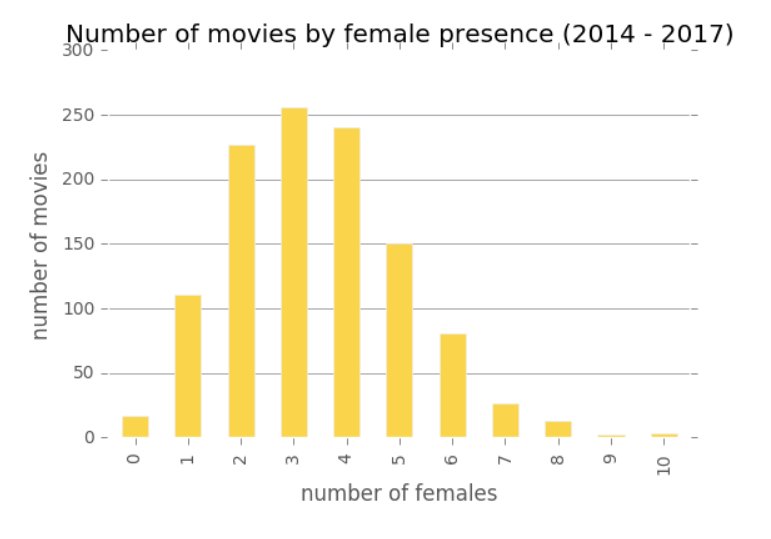
The movie industry still has ground to cover before reaching gender equality, but it is reassuring to see slow, steady progress. The distribution of female presence across all films reveals how lopsided things remain: 355 movies in our dataset have eight or more males in the top cast, compared to just 18 with at least eight females.
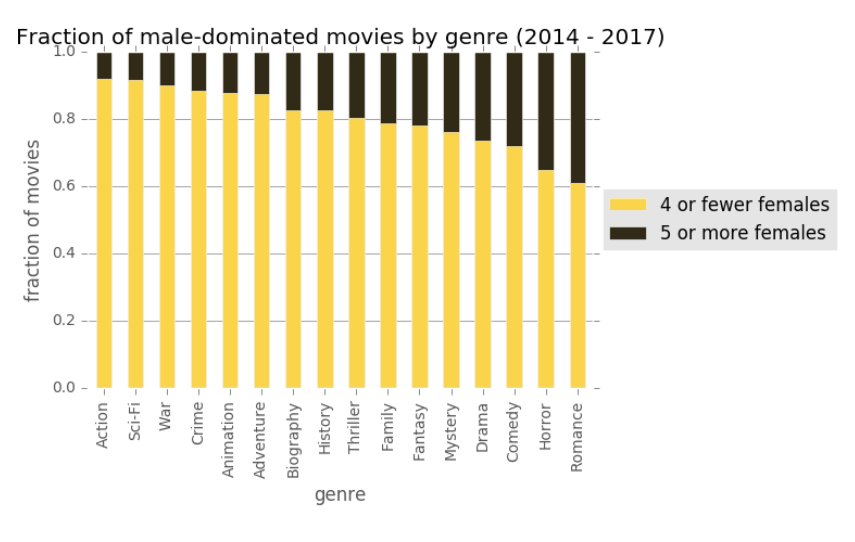
Breaking this down by genre reveals large disparities: action, sci-fi, and war movies are the worst offenders. Romance, horror, comedy, and drama have the most women in their cast.
Conclusion
Our results show that the data does not support the claim that female-led movies do better at the box office — but neither do male-led ones. The top-grossing movies consistently pass the Bechdel test, but we cannot exclude the possibility that this is the result of writers trying to simply fool the test. And while we still have a long way to go to reach gender equality in movies, we are making slow but steady progress.
Even though we cannot conclude that women bring in more box office revenue, we can reject the opposite claim. This means there is no reason not to cast more women — either in lead roles or supporting roles.
References
- Films with female stars earn more at the box office (2018, December 12). BBC. bbc.com
- McNary, D. (2018). Movies Starring Women Outperform Male-Led Titles at Box Office. Variety.
- shift7 (n.d.) Female-led films outperform at box office for 2014–2017. shift7.com
- Lauzen, M. (2019) It's a Man's (Celluloid) World. SDSU.